


iTunes error code or Apple Devices error numbers can appear when you update, restore, sync, or back up an iPhone or iPad on a computer. Depending on the error code, the problem may come from the USB connection, outdated software, network settings, security software, a failed restore, or in some cases the device hardware.
This guide covers common iTunes and iPhone errors including error 1, 2, 3, 4, 6, 7, 9, 11, 14, 16, 17, 18, 20, 21, 23, 29, 39, 56, 1600-1604, 1671, 2005, 4013, and 4014, together with practical fixes you can try. If you are using a newer Windows PC, you may use the Apple Devices app instead of iTunes for iPhone backup, update, and restore.
Important: Some advanced troubleshooting methods, especially Restore or factory reset, may erase the data on your iPhone or iPad. Back up important files first whenever possible.

Quick Fixes for iTunes & Apple Devices Errors
If iTunes or Apple Devices suddenly throws an error, you usually do not need to jump straight to Recovery Mode or a full restore. A few simpler checks are worth trying first.
1. Start With a Restart
Close iTunes or Apple Devices and restart both the computer and your iPhone or iPad. Then reconnect the device and try the same action again. It sounds basic, but temporary connection glitches are surprisingly common.
2. Check for Updates
Older versions of iTunes, Apple Devices, Windows, or macOS can cause restore and connection problems. Install any available updates before spending too much time on the error code itself.
3. Rule Out the Cable or USB Port
USB problems are another common culprit. Plug the iPhone directly into the computer, skip hubs and keyboard ports, and try a different port or cable if you have one. Disconnecting other USB accessories can also help.
4. Make Sure the Internet Is Stable
Some updates and restores need to reach Apple's servers. If your connection is unstable, switch networks or retry once the connection is more reliable.
5. Watch for Security Software Conflicts
Antivirus tools, firewalls, and VPNs can sometimes get in the way. Update them first. If the problem continues, temporarily disabling the software can help confirm whether it is involved.
6. Try Another Computer
Still getting the same iTunes error? Testing the device on another computer is a useful way to narrow things down. If it works there, the original computer is probably where you should keep troubleshooting.
7. Save Recovery Mode for Later
Recovery Mode is better treated as a fallback, not the first step. Use it when the iPhone will not update normally, is stuck on the Apple logo, or remains on the recovery screen. If Apple gives you both Update and Restore, try Update first because Restore wipes the device.

DearMob iPhone Manager - Best iTunes Alternative for Photo, Music, Video, and File Management
- Transfer iPhone photos, videos, music, and other files without relying on iTunes sync.
- Back up selected iPhone data to a computer instead of creating one all-or-nothing backup.
- Move files between an iPhone and computer without overwriting existing content.
- Keep backups stored locally, with encryption available for added privacy.
If your main purpose is to transfer or back up iPhone contacts, messages, notes, photos, videos, music, ebooks, calendar, voice memos, and other accessible files rather than repair iOS itself, you can try DearMob iPhone Manager as an iTunes alternative.

Quick Fixes for iTunes & Apple Devices Errors
How to Fix Fix iTunes Error Code 1
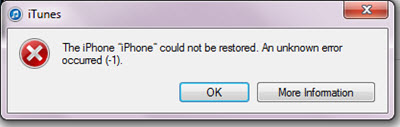
iTunes error 1 or error -1 may appear with a message such as "The iPhone could not be restored. An unknown error occurred (1)." It normally occurs during an iPhone restore or update. The cause can vary, so it is better to rule out software, USB, and computer-related problems before assuming that the iPhone has a hardware failure. Try these fixes:
- Close and reopen iTunes or Apple Devices.
- Restart both the iPhone and computer.
- Install any available updates for iTunes, Apple Devices, macOS, or Windows.
- Try a different USB cable or USB port.
- Connect the iPhone directly to the computer rather than through a USB hub.
- Check whether third-party security software is interfering with the connection.
- Try the restore or update on another computer.
- If a normal update still fails, try Recovery Mode.
- If Error 1 keeps appearing with different cables and computers, contact Apple Support or an authorized service provider.
How to Fix Fix iTunes Error Code 2
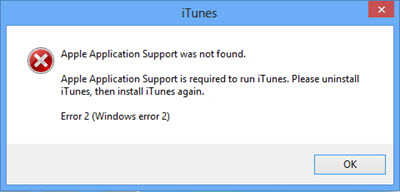
"iTunes error 2", "Windows error 2", or an "Apple Application Support was not found" message is generally associated with an iTunes installation problem on Windows. Possible causes include an incomplete installation, damaged Apple software components, outdated Windows software, or leftover files from an older iTunes installation. Here's how to fix iTunes error 2:
- Make sure you are signed in to Windows with an administrator account.
- Install available Windows updates.
- Restart the computer.
- Update or reinstall iTunes.
- If necessary, uninstall iTunes and related Apple software components before reinstalling.
- Make sure security software is not blocking the installer.
- If you are using a newer version of Windows, try the latest Apple Devices app for supported iPhone management, backup, update, and restore tasks.
These troubleshooting processes can be time-consuming, so you can try to backup iPhone without iTunes if you simply need to save or transfer accessible iPhone data.
How to Fix Fix iTunes Error Code 3
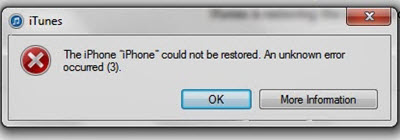
iTunes error 3 may appear when updating or restoring an iPhone or iPad. The error may be associated with an interrupted restore, software environment problem, connection problem, or device issue. Here's how to fix iTunes error code 3:
- Restart your iPhone/iPad and computer.
- Update iTunes or Apple Devices to the latest available version.
- Update Windows or macOS.
- Disconnect unnecessary USB devices.
- Try another USB cable and USB port.
- Try another computer.
- Check third-party security software.
- If the device cannot start normally, try Recovery Mode.
- Avoid erasing the iPhone as your first troubleshooting step because a factory restore removes device data and settings.
How to Fix Fix iTunes Error Code 4
iTunes Error 4 is an older error that has appeared in different download, connection, and software update situations. Because the same number has been reported under different circumstances over the years, it is better not to assume one specific cause. Here's how to fix iTunes error code 4:
- Restart iTunes or Apple Devices and your computer.
- Check your network connection.
- Update iTunes or Apple Devices.
- Check your USB cable and port if the error occurs during an iPhone update or restore.
- Check security software or firewall settings.
- Try another network or computer.
- If the exact Error 4 continues to appear, contact Apple Support for further assistance.
How to Fix Fix iTunes Error Code 6
"The iPhone could not be restored. An unknown error occurred (6)" may appear during an iPhone update or restore. Possible causes include a failed software installation, USB communication problem, security software interference, or other computer software issues. Here's how to fix iTunes error code 6:
- Restart the computer and iPhone/iPad.
- Update iTunes or Apple Devices.
- Install available Windows or macOS updates.
- Check the USB cable and USB port.
- Disconnect unnecessary USB devices.
- Update Apple device drivers if you are using Windows.
- Temporarily disable conflicting third-party security software.
- Try a different network.
- Try another computer.
If a previously downloaded iOS software file is damaged, letting Apple's software download a fresh copy may also help.
How to Fix Fix iTunes Error Code 7
iTunes error code 7 commonly appears on Windows together with Windows error 127 or Windows error 193. You may see a message such as "iTunes was not installed correctly. Please reinstall iTunes. Error 7." This usually points to a problem with iTunes or one of the software components it depends on.
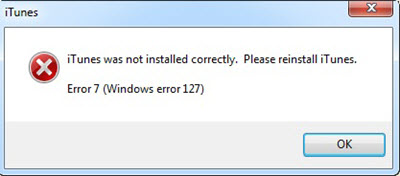
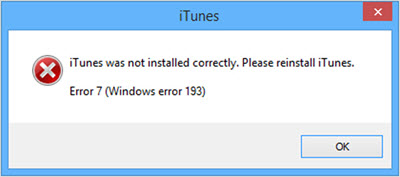
See possible solutions to fix iTunes error 7 (Windows error 127):
- Restart Windows.
- Install available Windows updates.
- Update Microsoft runtime components when required.
- Repair or reinstall Apple Application Support if it is installed.
- Uninstall damaged iTunes components and reinstall iTunes.
- Download Apple software from an official source.
See possible solutions to fix iTunes error 7 (Windows error 193):
- Check for Windows updates.
- Repair installed Apple software components.
- Repair or reinstall required Microsoft Visual C++ components instead of manually deleting Windows system DLL files.
- Reinstall iTunes.
- Restart the computer before launching iTunes again.
How to Fix Fix iTunes Error Code 9
iTunes error 9 or iPhone error 9 is one of the common errors that may occur while updating or restoring an iPhone or iPad. Error 9 can appear if the iPhone disconnects during the update or restore process, or if the computer cannot correctly communicate with the device. Blow are some possibible solutions to solve iTunes error 9:
- Update your Mac, Windows PC, iTunes, or Apple Devices.
- Force restart the iPhone.
- Connect the iPhone directly to the computer.
- Try another Apple or Apple-certified USB cable.
- Switch to another USB port.
- Disconnect other unnecessary USB devices.
- Check antivirus, firewall, and other security software.
- Try the update again.
- If Update is offered together with Restore, try Update first when possible.
- Try another computer if Error 9 continues.
If Error 9 still appears after changing the cable, port, and computer, contact Apple Support for further diagnosis.
How to Fix Fix iTunes Error Code 11
iTunes error code 11 may appear as an unknown error when restoring an iPhone or iPad. The problem may be related to the software or firmware being used, an outdated iTunes environment, or a communication problem between the device and computer. Here're some common solutions to fix iTunes error code 11:
- Restart the iPhone and computer.
- Update iTunes or Apple Devices.
- Update Windows or macOS.
- Use a reliable USB cable.
- Disconnect unnecessary USB devices.
- Try another USB port.
- Let Apple's software download the required update or restore software again.
- Try another computer.
How to Fix Fix iTunes Error Code 14
iTunes error code 14 may pop up while updating or restoring an iPhone or iPad. USB connection problems are one of the important things to check when this error appears, although other software and restore-related issues can also contribute. Here're some common solutions to fix iTunes error code 14:
- Update your computer and Apple software.
- Restart the iPhone and computer.
- Check the USB cable.
- Try another Apple or Apple-certified USB cable.
- Connect to another USB port directly on the computer.
- Avoid USB hubs and keyboard USB ports.
- Disconnect extra USB devices.
- Check security software.
- Try another computer.
If a downloaded iOS restore file appears damaged or incomplete, let the software obtain a fresh copy before trying again.
How to Fix iTunes Error Code 16
Error 16 has been reported in restore situations and may persist even after basic USB troubleshooting. However, do not immediately assume that Error 16 means the entire logic board has failed. Rule out software, computer, cable, port, and connection problems first. Check the common solutions to fix iTunes error code 16:
- Quit iTunes or Apple Devices and reopen it.
- Restart your computer and iPhone.
- Update Apple software and your operating system.
- Check the USB cable and port.
- Disable conflicting third-party security software temporarily.
- Try another cable and computer.
- If the iPhone remains stuck in recovery mode, use Recovery Mode troubleshooting.
- If the same error persists across different computers and cables, contact Apple Support or a qualified repair provider.
How to Fix iTunes Error Code 17
iTunes error 17 is commonly associated with a communication problem while the computer is attempting to contact Apple servers during an update or restore. Outdated software, network restrictions, security software, VPN settings, proxy settings, or a modified hosts file may affect the connection. Below are the quick tips for fixing iTunes error 17:
- Disconnect the iPhone and restart it.
- Restart the computer.
- Update iTunes or Apple Devices.
- Check your internet connection.
- Try another network.
- Temporarily turn off VPN or proxy software.
- Check firewall and security software.
- Make sure the computer can communicate normally with Apple services.
- If your hosts file was previously modified for iOS-related purposes, restore it to the correct configuration.
How to Fix iTunes Error Code 18
iTunes error 18 may appear when an iPhone cannot complete an update or restore correctly. Instead of immediately modifying the Windows Registry or using third-party registry cleaning software, start with standard Apple software and connection troubleshooting. Let's take a look some quick tips for fixing iTunes error code 18:
- Restart the iPhone and computer.
- Update iTunes or Apple Devices.
- Update Windows or macOS.
- Check your USB connection.
- Disconnect extra USB accessories.
- Check security software.
- Try another USB cable.
- Try another computer.
- If normal updating fails and the device cannot start, consider Recovery Mode.
How to Fix iTunes Error Code 20
iTunes error 20 may appear during an iPhone restore or while restoring data through older iTunes-related workflows. The error may involve communication, restore data, security software, or the computer environment. Here are the common solutions.
- Restart your iPhone and computer.
- Update Apple software.
- Check the USB port and cable.
- Check your internet connection.
- Check antivirus and firewall software.
- Make sure the backup or restore source you are using is available and not corrupted.
- Try another computer.
- Contact Apple Support if the error persists.
How to Fix iTunes Error Code 21
iTunes error 21 or iPhone error 21 often occurs during an iPhone restore. Network communication, security software, modified system settings, or restore-related problems may prevent the process from completing. Try the below solutions to fix the iTunes error 21.
- Restart the iPhone and computer.
- Update iTunes or Apple Devices.
- Check your USB cable and USB port.
- Disconnect unnecessary USB devices.
- Check antivirus, firewall, VPN, and security software.
- Check the computer's internet connection.
- If the hosts file was previously modified, restore the correct settings.
- Try another network.
- Try another computer.
- Use Recovery Mode only if standard troubleshooting does not work.
Back up important iPhone data before performing a Restore whenever possible.
How to Fix iTunes Error Code 23
iTunes Error 23 has been reported during restore, update, and other iPhone communication processes. Because the same error can appear under different circumstances, troubleshoot the computer, software, USB connection, and device before concluding that one component has failed. Let's fix it.
- Quit and reopen iTunes or Apple Devices.
- Restart the iPhone.
- Restart the computer.
- Install software updates.
- Check the USB cable and USB port.
- Check security software.
- Try another computer.
- If the error persists after basic troubleshooting, seek further hardware diagnosis.
How to Fix iTunes Error Code 29
iTunes error code 29 may occur while restoring or updating an iPhone. It has historically also been reported after certain hardware changes, including battery replacement. However, an Error 29 does not automatically prove that the battery or another hardware component is the cause. You can try the below solutions to get things fixed.
- Update iTunes or Apple Devices.
- Update the computer operating system.
- Restart the computer and iPhone.
- Check the USB cable.
- Temporarily disable conflicting security software.
- Try another computer.
- If the error appeared immediately after a hardware repair or battery replacement, have the hardware installation checked by a qualified service provider.
- Use a factory restore only as a later troubleshooting step because it may erase the device.
- If your purpose is simply to manage accessible iPhone files, try an iTunes alternative instead.
How to Fix Fix iTunes Error Code 39
iTunes error 39 has historically appeared during iPhone or iPad syncing, particularly in older iTunes photo-syncing workflows. If you encounter Error 39 on a current system, first determine whether you are using an older version of iTunes or an older photo library workflow. To fix this iTunes error code,
On Windows:
Restart the computer and iPhone, update iTunes or use the current Apple device management workflow where appropriate, check which photo folders are selected for syncing, temporarily disable photo syncing, sync the device again, and then re-enable only the photo folders you need.
On Mac:
Update macOS first and check the current photo syncing settings for your iPhone. Older instructions involving iPhoto Library and iPhone Photo Cache may no longer apply to modern macOS environments.
How to Fix Fix iTunes Error Code 56
iTunes error 56 became widely discussed around older iOS update releases, but the same error number should not automatically be assumed to have the same historical cause today. If your iPhone displays an unknown error 56 while updating or restoring, start with general update and connection troubleshooting. Try the solutions shared below to fix this iTuns error code 56.
- Update Apple software and the computer operating system.
- Restart the iPhone and computer.
- Check the USB cable and USB port.
- Close unnecessary third-party software.
- Disconnect unnecessary USB devices.
- Try another computer.
- If the error continues after standard troubleshooting, contact Apple Support.
How to Fix iTunes Error Code 1600, 1601, 1602, 1603, 1604
You may see iTunes error 1600, 1601, 1602, 1603, or 1604 when attempting to restore or update an iPhone. These errors have commonly been associated with USB communication, security software, or the restore environment. Here are the possible solutions that can help you resolve the iTunes error 16xxx.
- Make sure iTunes or Apple Devices is updated.
- Restart the computer and iPhone.
- Connect the iPhone directly to a USB port on the computer.
- Do not use a keyboard USB port or USB hub.
- Try another Apple or Apple-certified cable.
- Switch to another USB port.
- Disconnect unnecessary USB accessories.
- Check third-party security software.
- Try another computer.
- Use Recovery Mode if the device cannot be updated normally.
How to Fix iTunes Error Code 1671
iTunes error 1671, iPad error 1671, or iPhone error 1671 may appear when attempting to sync, back up, update, or restore a device. The problem can involve outdated computer software, communication with Apple services, security software, or USB connectivity. Here's how you can fix the iTunes error code 1671:
- Wait for any software download or update currently in progress to finish.
- Update iTunes or Apple Devices.
- Update Windows or macOS.
- Restart the computer and iPhone.
- Disconnect unnecessary USB accessories.
- Check the USB cable and USB port.
- Check antivirus or firewall software.
- Check the network connection.
- Try another computer and network.
Avoid modifying system files unless you know they were previously changed and need to be restored to their normal configuration.
How to Fix iTunes Error Code 2005
iTunes error 2005 may occur when updating or restoring an iPhone, particularly when communication between the iOS device and computer is unstable. You can try the below quick tips to solve the error.
- Restart iTunes or Apple Devices.
- Unplug and reconnect the iPhone.
- Restart the computer.
- Restart the iPhone.
- Check the USB cable.
- Switch to another USB port.
- Connect directly to the computer.
- Disconnect unnecessary USB devices.
- Check third-party security software.
- Try another computer.
Error 2001, 2002, 2005, 2006, and 2009 may all be worth checking from the USB connection side when they occur during an update or restore.
How to Fix iTunes Error 4013/4014
iTunes error 4013/4014 or iPhone error 4013/4014 can appear while updating or restoring an iPhone. These errors may occur if the iPhone disconnects during an update or restore, or if the computer cannot correctly communicate with the device. A bad USB connection is one possibility, but you should not automatically assume that every 4013 or 4014 error is caused by a faulty cable or hardware. Here's how to solve iTunes error 4013 and 4014:
1. Update Your Computer and Apple Software
Make sure your Mac or PC is fully updated. Windows users should install the latest available Apple Devices app or applicable iTunes version.
2. Force Restart the iPhone
Force restart the device and reconnect it to your computer. For newer iPhones, quickly press and release Volume Up, quickly press and release Volume Down, and then hold the Side button until the Apple logo appears.
3. Try Update Before Restore
If the computer gives you the choice between Update and Restore, try Update first. This attempts to reinstall iOS without immediately erasing your personal data.
4. Check the USB Cable
Use another Apple or Apple-certified USB cable if possible. Do not use a damaged, loose, or unreliable cable.
5. Change the USB Port
Connect the iPhone directly to another USB port on your computer. Avoid USB hubs and keyboard USB ports.
6. Try Another Computer
If Error 4013 or 4014 continues, update or restore the iPhone on another computer. This can help determine whether the problem is related to your original computer environment.
7. Use Recovery Mode If Necessary
If the iPhone remains stuck in recovery mode or cannot update normally, reconnect it in Recovery Mode and try again. Remember that choosing Restore erases the device.
8. Contact Apple Support
If Error 4013 or 4014 continues after updating the software, force restarting, changing the cable, changing the USB port, and trying another computer, contact Apple Support or an authorized service provider for further diagnosis.
iTunes Error Fixes Sum up
iTunes and Apple Devices error codes may look confusing, but many of them come back to a few basic areas: software updates, USB connection, network communication, third-party security software, and the iPhone itself.
- Update your computer and Apple software.
- Restart the computer and iPhone.
- Check the USB cable and port.
- Connect the iPhone directly to the computer.
- Check your network and security software.
- Try another cable, USB port, computer, or network.
- Use Recovery Mode only when normal updating does not work.
- Contact Apple Support if the same error persists after standard troubleshooting.
If your goal is file management rather than iOS repair, you can use DearMob iPhone Manager to manage, transfer, and back up accessible iPhone content without relying on the traditional iTunes syncing workflow.
About The Author


Joakim is a tech addict and mobile enthusiast ever since the Symbian era. Now as a technical writer, he loves to test software and devices, and share his discoveries in plain language. Jogging helps him think better and stay energized throughout the day.

