


A capable iPhone photo manager can pull a cluttered iOS gallery back under control.
You may need to sort thousands of shots, move originals to a PC, delete twenty near-identical portraits, or clear years of forgotten screenshots. Yet Apple’s ecosystem often makes those simple jobs feel harder than they should, especially on Windows, where File Explorer exposes little more than camera folders and gives you limited control over albums, Live Photos, and HEIC files.
The right iPhone photo organizer gives you a practical way out. It can help you declutter the library, organize photos into a system you can find later, and back up originals while preserving Live Photos, edits, dates, locations, and other metadata. Whether you want to clean up the library on your iPhone, manage it from a larger desktop screen, or move the master collection to storage you control, the six options below cover the best on-device, desktop, and cloud approaches.
- Quick Comparison of the Best iPhone Photo Managers
- Choose Where Your Photo Library Should Live First
- Top 6 Best iPhone Photo Managers
- 1. DearMob iPhone Manager: Best Desktop iPhone Photo Manager
- 2. Apple Photos: Best Built-In Photo Organizer
- 3. Google Photos: Best Cloud Photo Manager for Mixed Devices
- 4. Slidebox: Best for Sorting a Messy Camera Roll Quickly
- 5. Mylio Photos: Best Private, Local-First Library
- 6. PhotoSync: Best for Automatic Transfers and NAS Backups
- How to Choose the Right iPhone Photo Manager
- How to Manage iPhone Photos with DearMob
- Frequently Asked Questions
Quick Comparison of the Best iPhone Photo Managers
| Photo manager | Best for | Management style | Platforms | Main tradeoff |
|---|---|---|---|---|
DearMob iPhone Manager |
Desktop sorting, two-way transfer, and offline backup |
Desktop/local |
Windows, Mac |
Requires connecting the iPhone to a computer |
Apple Photos |
Built-in organization and Apple-device syncing |
On-device + cloud |
iPhone, iPad, Mac, iCloud.com, Windows via iCloud |
Albums do not remove photos from Recents |
Google Photos |
Search and access across different devices |
Cloud |
iPhone, iPad, Android, web |
Apple album structures do not migrate neatly |
Slidebox |
Quickly sorting a messy camera roll |
On-device |
iPhone, iPad |
Not a full backup or desktop archive |
Mylio Photos |
A private, local-first library across devices |
Local-first catalog |
iPhone, iPad, Mac, Windows, Android |
More setup than a conventional cloud library |
PhotoSync |
Automatic transfers to a computer, NAS, or cloud service |
Transfer/backup workflow |
iPhone, iPad, Mac, Windows, Android |
Better at moving files than finding or curating them |
Choose Where Your Photo Library Should Live First
Most disappointing photo-manager setups begin with an app choice instead of a storage choice. Decide where the full-resolution originals should live, then pick the tool that supports that plan.
- Keep the library in Apple’s ecosystem: Apple Photos and iCloud Photos require the least setup.
- Keep it in a cross-platform cloud library: Google Photos is easier to reach from Android, Windows, Mac, and the web.
- Keep it on a computer or external drive: DearMob gives you direct control over exports, folders, formats, and backups.
- Keep a local-first catalog across several devices: Mylio Photos brings multiple sources into one searchable library.
- Send new photos to a NAS or several destinations: PhotoSync is built for repeatable transfer workflows.
Do not confuse syncing with an independent backup. If you use iCloud Photos, deleting a picture on one synced device deletes it on the others. A photo manager can make a library easier to browse, but irreplaceable photos should still have a second copy outside the main synced library.
Top 6 Best iPhone Photo Manager & Organizer
1. DearMob iPhone Manager: Best Desktop iPhone Photo Manager
Best for: Windows or Mac users who want selective control over iPhone photos without iTunes or iCloud.
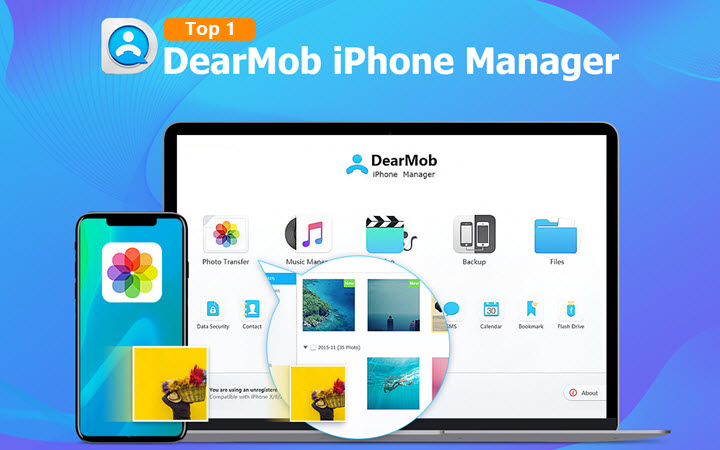
DearMob iPhone Manager is a dedicated iOS content management tool that helps you to flexibly add, delete, and move iPhone photos on Windows and Mac.
iPhone photo management on PC becomes super easy with this smart and lightweight tool. Fully backup and restore iPhone is 1-click away, while you can also choose to selectively backup and restore some of your iOS files, including photos, videos and audio tracks, contacts, SMS, and 17+ types of files. For photo hoarders, try DearMob iPhone Manager to manage photos in the most straightforward way and keep enjoying and capturing more moments in your life!
DearMob iPhone Manager - iPhone Photo Management on Windows/Mac Made Easy
- Batch transfer a huge amount of photos stably.
- Manage iPhone photos by albums/types/date/apps.
- Auto transfer both filtered and original photos.
- Showcase the best shot of burst photos.
- Convert HEIC/Live/Raw/GIF/edited/live photos at your choice.
- Encrypt sensitive pictures upon transferring.
- Keep intact GPS data, time data, and all EXIF metadata of iPhone photos.
- Backup iPhone without iTunes, no accidental data erasing.

Pros:
- Strong support for diverse photo types including HEIC, Live, RAW, and GIF.
- Ability to encrypt photos for privacy.
- Maintains all metadata intact during transfer.
- Easy 1-click full backup and selective backup options.
Cons:
- Paid software (though trial version is available).
Keep in mind: It does not provide the always-available cloud search of Google Photos or the automatic on-phone collections in Apple Photos. The free version is suitable for evaluating the workflow; unlimited use requires a license.
2. Apple Photos: Best Built-In Photo Organizer
Best for: People who mainly use Apple devices and want an organizer that works without importing or rebuilding the library.
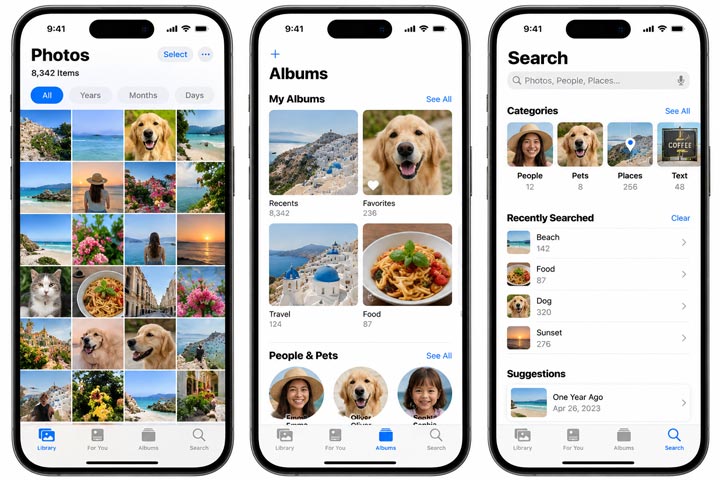
Apple Photos is the simplest choice when the iPhone is already the center of your photo life. New pictures appear immediately, edits are nondestructive, and Collections automatically separates media into views such as People & Pets, Trips, screenshots, videos, Live Photos, receipts, and documents.
Search is often faster than building a complex album tree. You can look for a date, location, person, object, or text visible inside a picture. The Duplicates utility identifies duplicate photos and videos and can merge them while retaining relevant information.
Albums are useful for trips, family events, work projects, and pictures you plan to edit. They behave differently from desktop folders, though. Adding one photo to three albums does not create three full copies, and it does not move the photo out of Recents. Each album points back to the same item in the main library.
Pros:
- Built into every iPhone and easy to use.
- Offers automatic search, duplicate detection, and iCloud syncing.
Cons:
- Albums do not remove photos from Recents.
- Deletions sync across devices when iCloud Photos is enabled.
Keep in mind: iCloud Photos keeps changes synchronized. Delete a photo from one connected device and it is deleted from the others too, although Recently Deleted provides a limited recovery window.
3. Google Photos: Best Cloud Photo Manager for Mixed Devices
Best for: Households that use a mix of iPhone, Android, Windows, and Mac devices and want a searchable cloud library.
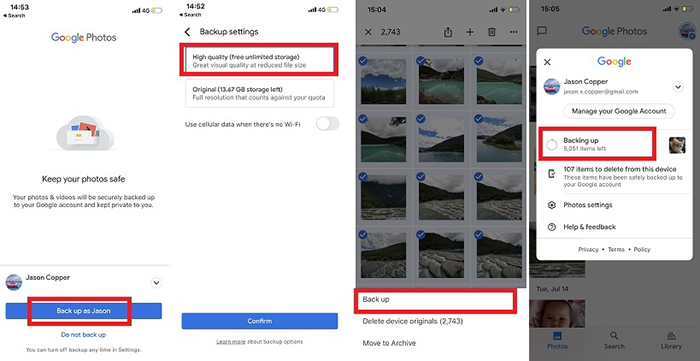
Google Photos works well when the photo library needs to follow you beyond Apple hardware. Once backup is enabled, the same library is available in the iPhone app, on Android devices, and at photos.google.com from a Windows PC or Mac.
Its strongest feature is search. You can find photos by people, places, objects, events, or text without manually filing every image. Albums can be sorted and rearranged, and supported accounts can automatically add photos of selected people or pets. Storage-management suggestions can also surface screenshots, blurry shots, similar images, and large videos for review.
This amazing iPhone photo manager also offers an optional Free up space feature for photos and videos that have already been backed up. It removes the local copies only after you start the cleanup, while keeping the cloud versions in your Google Photos library. The removed items will no longer appear in Apple Photos unless you download them again, and they may require an internet connection to view.
Pros:
- Unlimited (with quality limits) cloud storage for photos.
- Automatic backup and seamless sync across devices.
- Powerful AI search, facial recognition, and organization.
- Easy sharing and collaboration features.
- Free to use with a Google account.
Cons:
- Requires internet connection for syncing and access.
- Original quality storage may count against Google Drive space quota.
- Privacy concerns for cloud-stored photos depending on user preferences.
Keep in mind: Google Photos does not reproduce every Apple Photos album and folder exactly. Storage is tied to the Google Account, and a move from iCloud Photos should be treated as a careful migration rather than a casual second upload.
4. Slidebox: Best for Sorting a Messy Camera Roll Quickly
Best for: iPhone users whose main obstacle is the time required to sort existing photos.
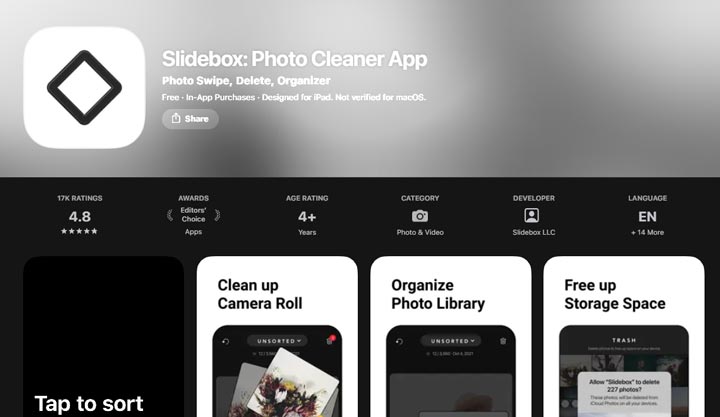
Slidebox reduces photo organization to a small set of gestures. Swipe up to trash a picture, swipe down to favorite it, or tap an album to file it. That makes a backlog of screenshots, burst shots, memes, and near-identical pictures feel more like a review queue than an endless wall of thumbnails.
The app works with the Apple Photos library, so albums and deletions are reflected there instead of being trapped in a separate catalog. Progress statistics show how much of the library has been reviewed and placed into albums.
Slidebox is most useful when you already know which albums you need and simply want a faster way to process the backlog. It does not replace a second backup, a desktop archive, or a multi-device library system.
Pros:
- Makes manual sorting fast with simple swipe gestures.
- Works directly with the Apple Photos library.
Cons:
- Offers limited automatic organization.
- Does not provide a complete backup system.
Keep in mind: Changes affect the same Photos library used by the iPhone. Back up the originals and test the workflow on a small group before a large deletion session.
5. Mylio Photos: Best Private, Local-First Library
Best for: People with large, scattered libraries who value offline access, privacy, and control over storage.
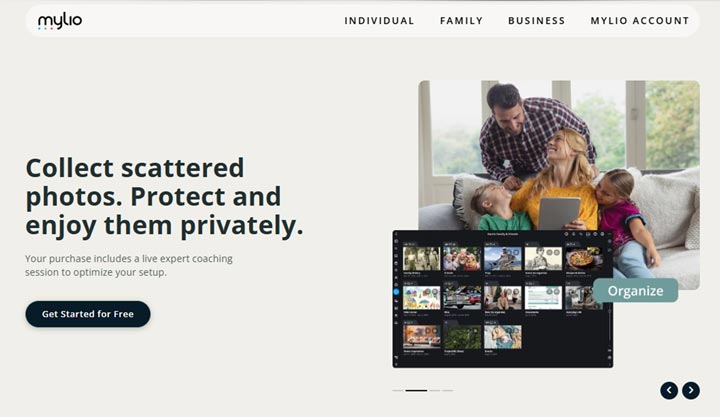
Mylio Photos is built for a collection spread across phones, computers, external drives, and other storage. It catalogs those sources in one library and supports iOS, iPadOS, macOS, Windows, and Android without requiring the originals to live in a conventional cloud photo account.
Imported folders keep their existing structure. Mylio also organizes media by date and folder, while SmartTags, QuickFilters, face tagging, albums, keywords, ratings, camera data, file types, and geotags help narrow a large search. Optimized versions can stay on a phone while full originals remain on devices with more storage.
The extra control comes with extra responsibility. A local-first catalog is not automatically a backup. Store important originals on at least two separate devices, and keep one copy away from the main computer or drive.
Pros:
- Keeps the library local and accessible across multiple devices.
- Offers extensive search, tagging, and metadata tools.
Cons:
- Requires more initial setup.
- Advanced syncing and protection features may require a subscription.
Keep in mind: Initial setup and storage planning of this iPhone photo organizer take more work than turning on a standard cloud service.
6. PhotoSync: Best for Automatic Transfers and NAS Backups
Best for: Anyone who wants recurring transfers to a computer or NAS while keeping an understandable folder structure.
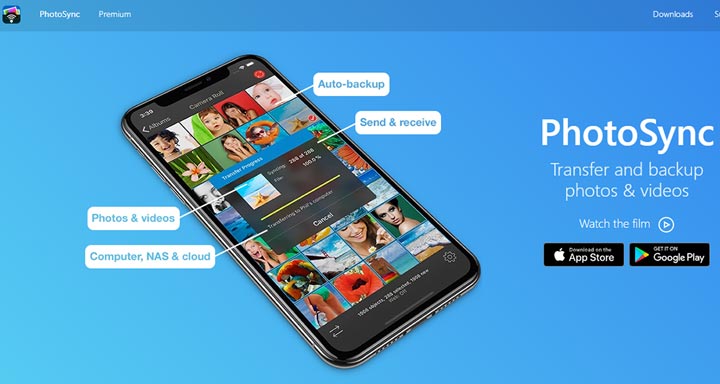
PhotoSync focuses on getting photos and videos to the right destination. It can transfer media from an iPhone to a Mac, Windows PC, NAS, another phone or tablet, wireless storage, and supported cloud services. Premium automation can send new media in the background instead of waiting for a manual backup session.
Its folder options are particularly useful for people who dislike the album-reference model in Apple Photos. PhotoSync can recreate iOS albums as folders at the destination or generate subfolders based on details such as the device name and album.
PhotoSync is not designed to decide which picture from a birthday party is the keeper. Pair it with Apple Photos or Slidebox for curation, then use PhotoSync to make the organized result portable and easier to back up.
Pros:
- Transfers photos to computers, NAS devices, and cloud services.
- Can recreate iPhone albums as destination folders.
Cons:
- Provides limited search and curation features.
- Automatic transfers require premium features.
Keep in mind: It is a transfer pipeline rather than a complete visual catalog with advanced search and curation.
How to Choose the Right iPhone Photo Manager
A polished product page cannot tell you how an app will behave with your own 30,000-photo library. The most useful parts of the original selection process still apply: test the exact workflow before paying or moving the full collection.
Test It with a Large, Mixed Library
Almost every app feels fast when an iPhone contains 50 pictures. A useful test set includes several thousand items, HEIC and JPEG photos, Live Photos, edited images, bursts, screenshots, long videos, and albums created by other apps. Check how long thumbnails take to load and whether the app stays responsive while you scroll, select, and export.
Check Where the Originals Go
An organizer, a sync service, and a backup tool are not the same thing. Ask these questions before committing:
- Does the app keep originals on the iPhone, upload them to a cloud account, or export them to ordinary folders?
- If you delete an item in the manager, is it also deleted from iCloud Photos or another synced library?
- Can you choose an external drive or NAS as the destination?
- Can the exported files be opened without the photo-manager app?
Verify Photo Types and Metadata
Do not test with JPEG files alone. Confirm how the software handles:
- HEIC and Apple ProRAW images
- Live Photos
- GIFs and edited photos
- Burst groups
- Capture dates and original filenames
- GPS locations and other EXIF metadata
- Existing albums and folders
A Live Photo may arrive on a computer as one still image plus one short video. That can be the correct export behavior, but you should know what the destination will contain before transferring the entire library.
Look for Dependencies and Platform Limits
Some desktop managers need Apple drivers or companion software to communicate with an iPhone. Cloud tools may need the app to remain open long enough to finish an initial backup. iOS permissions can also limit deleting, background transfers, or access to items stored only in iCloud.
Run one complete test: connect the phone, browse an older album, export a mixed group, open the files on the destination, import one picture back, and confirm how deletion works. That ten-minute check reveals more than a feature chart.
How to Manage iPhone Photos with DearMob
The original article’s DearMob walkthrough remains useful, but the workflow is clearer when export, import, and deletion are treated as separate actions.
Step 1: Connect and Trust the Computer
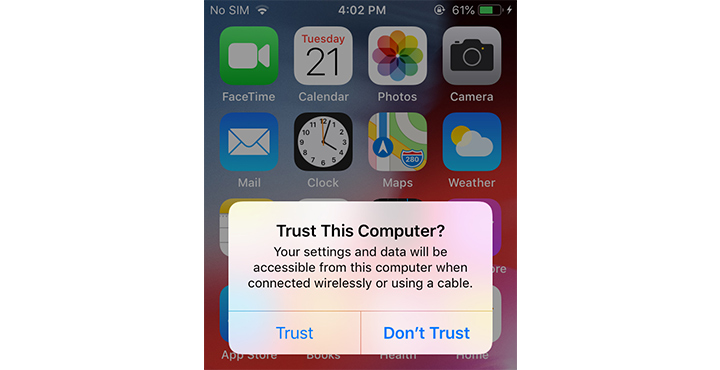
Install and launch DearMob iPhone Manager on a Windows PC or Mac. Connect the unlocked iPhone by USB, then tap Trust if the iPhone asks whether to trust the computer. Wi-Fi connection is also available after the device has been paired.
Step 2: Open Photo Transfer and Review the Library
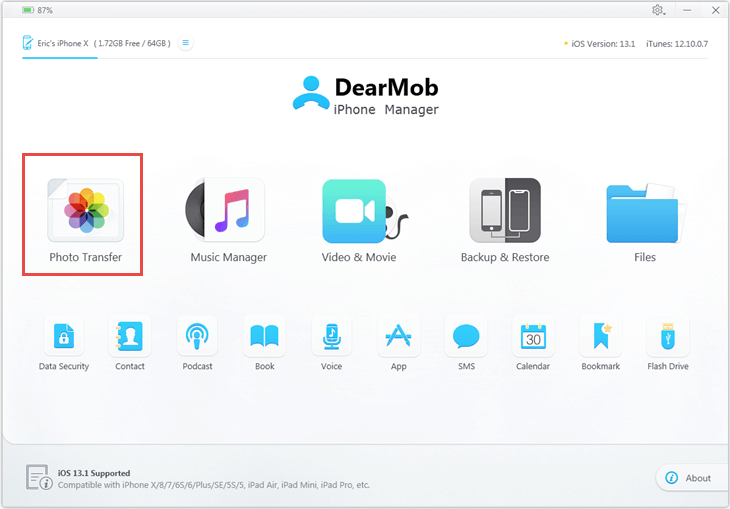
Choose Photo Transfer on the main screen. Browse by album, media type, or date, then change the thumbnail size if you need a closer look before selecting pictures.
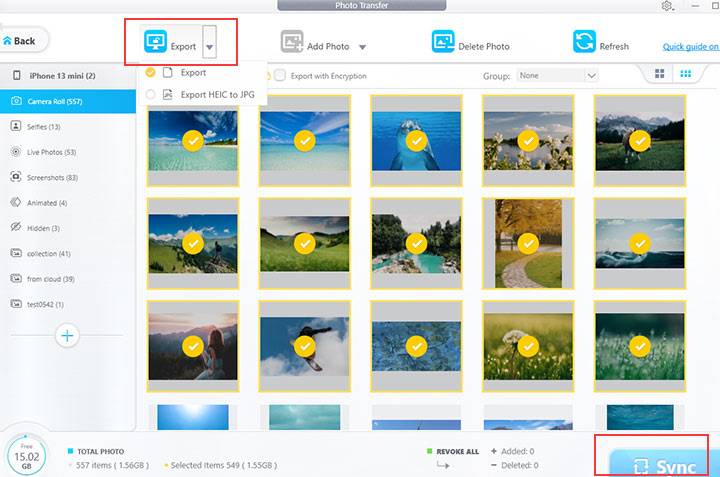
Step 3: Choose Export, Add Photo, or Delete Photo
- Export to the computer: Select the photos and click Export. Keep the originals, or choose HEIC-to-JPG conversion when compatibility matters. DearMob can export Live Photos as an image and video pair and can preserve the album structure.
- Import to the iPhone: Create or open a custom album, click Add Photo, select the files or folders on the computer, and click Sync.
- Delete from the iPhone: Select unwanted items, click Delete Photo, review the pending changes, and click Sync. You can cancel before syncing if you selected the wrong item.
Step 4: Verify the Result Before Removing Originals
Open several exported files on the computer. Check an older picture, an edited photo, a Live Photo, a HEIC image, and a video. Confirm dates, locations, image dimensions, and the destination folder before deleting anything from the iPhone.
Final Words
That's all for the top 6 iPhone photo managers for Windows this year. Also, we'll catch up with the latest trends and tools in the future to provide you with the best iPhone photo management software for your gorgeous pictures.
Now, if you want to flexibly transfer, back up, migrate, and organize photos on your iPhone, or convert HEIC to JPG at your will for maximum compatibility, DearMob iPhone Manager is exactly what you need.
Frequently Asked Questions
1. Is an iPhone photo manager the same as a photo backup?
No. A manager helps you browse, organize, transfer, or delete media. A backup keeps another recoverable copy. Apple Photos with iCloud, for example, synchronizes changes across devices; it should not be the only copy of irreplaceable photos. Export important originals to a computer, external drive, NAS, or another backup service.
2. Can I move photos into albums so they disappear from Recents?
Not in Apple Photos. An album points to a photo in the main library, so the item remains visible in Recents without creating another full copy. To work with physical folders, export the photos to a computer or NAS with a desktop or transfer tool.
3. Can I manage iPhone photos without iCloud?
Yes. DearMob can export and import photos through a Windows PC or Mac, Mylio Photos can build a local-first multi-device catalog, and PhotoSync can transfer media to a computer or NAS. You can still use Apple Photos on the phone without making iCloud the destination for the full library.
4. How do I avoid duplicates when switching photo managers?
Choose one master library and migrate a small test set first. Avoid downloading from one cloud service, re-importing into another, and then turning both automatic backups on before checking the result. Compare item counts and open representative originals at the destination before deleting or uploading the next batch.